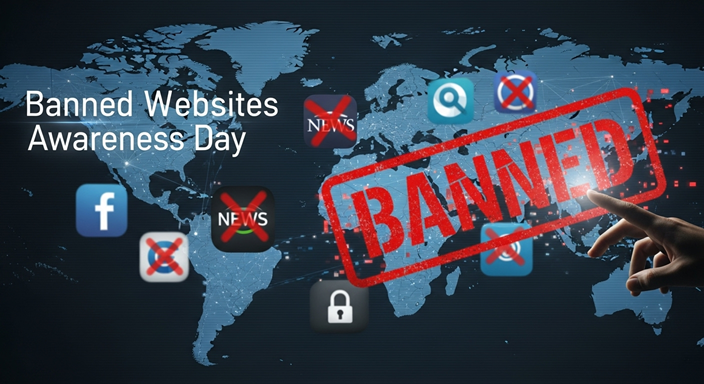
Every year, on Banned Websites Awareness Day, #educators, #students, #activists, and #digital rights #advocates come together to shine a light on an issue that often goes unnoticed but affects millions #worldwide — restricted access to #knowledge. First initiated by the #AmericanAssociationOfSchoolLibrarians (#AASL), this day emphasizes the dangers of unnecessary website bans and their negative impact on #education, #learning, and #free expression. The conversation around internet freedom has grown louder over the years, and #BannedWebsitesAwarenessDay has become a global reminder that digital access is as vital as access to #books, #ideas, and #information.
History of Banned Websites Awareness Day
The origins of Banned Websites Awareness Day can be traced back to 2010, when the American Association of School Librarians (AASL) first announced its observance. The AASL noticed a worrying trend in schools across the United States—many institutions were over-blocking websites due to broad interpretations of the Children’s Internet Protection Act (CIPA). While the law aimed to protect children from harmful online material, its misapplication often led to blocking of educational websites, social platforms, and even scholarly resources.
In response, AASL launched this awareness day to educate policymakers, parents, and educators about the consequences of excessive web filtering. They wanted to strike a balance—protecting children while also ensuring their access to valuable information. Since then, the day has been marked every last Wednesday of September, coinciding with Banned Books Week, drawing parallels between banned books in libraries and banned websites in schools and communities.
Importance of Banned Websites Awareness Day
The importance of Banned Websites Awareness Day lies in the universal right to knowledge. In today’s digital age, information is no longer confined to books or classrooms; it flows through online libraries, articles, videos, and interactive platforms. When schools or governments restrict access to websites unnecessarily, they deny learners the tools they need to thrive.
This day serves as a call to action against censorship that stifles creativity, innovation, and intellectual growth. It reminds us that:
-
Over-blocking can hinder students’ ability to research effectively.
-
It prevents teachers from using digital platforms that foster collaboration.
-
It creates a generation less prepared for a digital world.
Thus, the day’s importance extends beyond schools—it is about freedom of expression, equity in education, and the right to a well-informed society.
Significance of Banned Websites Awareness Day
The significance of Banned Websites Awareness Day lies in its broader message: access is empowerment. In societies where knowledge is controlled, citizens cannot think critically, question authority, or innovate. By observing this day, advocates emphasize that banning websites is not a trivial inconvenience but a form of censorship that weakens democracy and progress.
The day also carries symbolic weight, aligning itself with the larger struggle against all forms of censorship—books, art, journalism, and free speech. It signifies:
-
The recognition that digital literacy is part of human rights.
-
A reminder that technology, when restricted unfairly, creates inequality.
-
A celebration of educators and librarians who champion free access despite challenges.
Why Banned Websites Awareness Day Is Celebrated
Banned Websites Awareness Day is celebrated to:
-
Educate communities about the dangers of excessive website filtering.
-
Advocate for balanced policies that protect without over-restricting.
-
Encourage open dialogue between students, educators, and lawmakers.
-
Empower students to become informed digital citizens.
It is celebrated because blocking websites is not simply about limiting access to a page; it is about shaping what people can and cannot learn. In an age where learning is dynamic, censorship risks leaving individuals—and entire communities—behind.
How Banned Websites Awareness Day Is Celebrated
The day is celebrated in diverse and creative ways:
-
Workshops and Seminars: Schools and libraries organize events to discuss internet censorship, digital literacy, and safe online practices.
-
Panel Discussions: Experts debate the balance between online safety and access to information.
-
Social Media Campaigns: Hashtags like #BannedWebsitesAwarenessDay trend online, amplifying awareness.
-
Student Activities: Role-plays, debates, and poster-making contests help students explore the issue from multiple perspectives.
-
Community Dialogues: Parents and educators come together to examine filtering practices in schools.
-
Public Readings: Just like Banned Books Week features public readings of banned books, some communities conduct live explorations of blocked websites to showcase their educational value.
Where Banned Websites Awareness Day Is Celebrated
While Banned Websites Awareness Day started in the United States, its spirit resonates across the globe. Internet censorship is a worldwide issue, and many countries observe this day in different ways:
-
United States: Actively observed in schools and libraries.
-
Europe: Discussions on digital rights often tie into the day’s themes.
-
Asia and Middle East: While not officially recognized everywhere, activists highlight it in connection with broader digital freedom movements.
-
Global Online Spaces: Social media platforms, forums, and international organizations participate in raising awareness.
The celebration may not always be formal, but the message transcends borders, making it a day of global importance.
How Citizens Get Involved
Citizens play a crucial role in making this day impactful. Here’s how they get involved:
-
Educators advocate for smarter filtering policies in schools.
-
Students raise their voices through essays, projects, and online campaigns.
-
Parents engage in dialogues with schools about balancing safety with access.
-
Activists organize online petitions and awareness campaigns.
-
Ordinary Citizens share posts, articles, and experiences to create a ripple effect.
The collective participation ensures that the message spreads beyond institutions into homes and communities.
Theme for Banned Websites Awareness Day 2025
Every year, the theme of Banned Websites Awareness Day reflects current challenges in digital spaces. For 2025, a fitting theme would be:
“Breaking the Firewall: Empowering Digital Citizens”
This theme highlights the importance of moving beyond barriers, fostering responsible digital citizenship, and ensuring that access to knowledge is recognized as a right, not a privilege.
10 Famous Quotes for Banned Websites Awareness Day
-
“The advancement of knowledge depends on the freedom to seek it.” — Anonymous
-
“Censorship, like charity, should begin at home; but unlike charity, it should end there.” — Clare Boothe Luce
-
“You can’t stop the future, you can’t rewind the past; the only way to learn is to press play.” — Anonymous
-
“Information is the currency of democracy.” — Thomas Jefferson
-
“The internet is becoming the town square for the global village of tomorrow.” — Bill Gates
-
“Restricting access to knowledge is a restriction on freedom itself.” — Anonymous
-
“Education is the most powerful weapon which you can use to change the world.” — Nelson Mandela
-
“The price of freedom is eternal vigilance.” — Thomas Jefferson
-
“Libraries should be open to all—digital or physical.” — Anonymous
-
“Knowledge, once free, should never be locked again.” — Anonymous
FAQs
1. What is Banned Websites Awareness Day?
It is a day dedicated to raising awareness about unnecessary internet censorship, especially in schools and libraries, and promoting fair access to online resources.
2. When is Banned Websites Awareness Day observed?
It is observed every year on September 28th.
3. Who started Banned Websites Awareness Day?
The American Association of School Librarians (AASL) initiated it in 2010.
4. Why is the day linked with Banned Books Week?
Because both highlight censorship—Banned Books Week focuses on restricted literature, while this day emphasizes digital censorship.
5. Is the day observed globally?
Though officially recognized in the United States, the principles of the day are globally relevant and celebrated in various forms worldwide.
6. How can schools participate?
Schools can host debates, discussions, workshops, and awareness sessions to highlight the effects of blocking educational websites.
7. Why are some websites banned in schools?
Often due to concerns about inappropriate content or distractions, but sometimes over-blocking unintentionally restricts valuable educational resources.
8. What role do students play?
Students play an active role by advocating for better policies, creating awareness projects, and responsibly using digital platforms.
9. Is internet censorship always bad?
Not necessarily—reasonable filters can protect children from harmful content. The problem arises when filtering becomes excessive.
10. What is the 2025 theme?
The 2025 theme is “Breaking the Firewall: Empowering Digital Citizens.”
Conclusion
Banned Websites Awareness Day is more than just a date on the calendar—it is a reminder that information is power, and when that power is withheld, society suffers. From its roots in the American Association of School Librarians’ advocacy in 2010 to its growing global significance today, the day underscores the ongoing struggle for balance between safety and access. As we look toward the 2025 theme, “Breaking the Firewall: Empowering Digital Citizens,” we must remember that the responsibility of preserving digital freedom lies with all of us—students, educators, parents, and citizens alike. By participating in this movement, we are not only protecting the right to information but also securing the foundations of democracy, progress, and innovation for generations to come.
|
!!! Stay Updated !!! 👉 Follow and Join us on 👈 📰 Trending News | 📢 Important Alerts | 💼 Latest Jobs LinkedIn | Threads | Facebook |Instagram | Tumblr 📱 Follow us daily & never miss an update 📱 |

Someshwar Chowdhury is a seasoned Chartered Mechanical Engineer, Educator, and Technology enthusiast with over a decade of experience in engineering education and consultancy. Someshwar is also an active blogger, trainer, and member of professional bodies like ISHRAE and GREEN ADD+. When not teaching or consulting, he enjoys blogging, music, and exploring green technologies.
Discover more from Today's Significance
Subscribe to get the latest posts sent to your email.