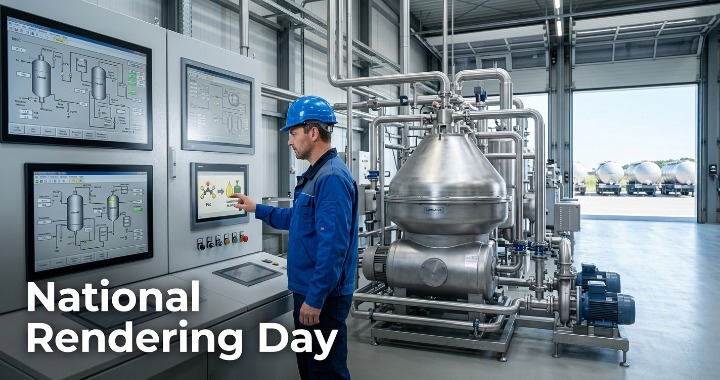
Every year on April 21, National Rendering Day is observed to highlight a lesser-known yet highly significant #industry that plays a crucial role in #sustainability and #resourcemanagement. #NationalRenderingDay is not just about #industrialprocesses — it is about #transforming waste into valuable resources that benefit the #environment, #economy, and #society. Rendering involves converting animal by-products into usable materials like #fats, #proteins, and #biofuels. This day spreads awareness about #wastereduction, #recycling, and #eco-friendly practices. It reminds #citizens of the importance of responsible consumption and the hidden systems that keep our world #cleaner and more #sustainable.
History of National Rendering Day
National Rendering Day was first established in 2019 by the North American Renderers Association (NARA), a trade organization dedicated to promoting the rendering industry and educating the public about its benefits. The initiative was launched to correct misconceptions surrounding rendering and to emphasize its environmental contributions.
Rendering itself is not a modern concept. Its origins date back thousands of years when early civilizations used animal fats for soap-making, candle production, and even medicinal purposes. However, as industrialization grew, rendering evolved into a structured and regulated industry. By the 20th century, it became an essential part of waste management systems in developed economies.
The introduction of National Rendering Day aimed to bring recognition to an industry often overlooked despite its importance. It also sought to highlight the people working behind the scenes—engineers, technicians, and laborers—who ensure that waste materials are efficiently recycled rather than discarded.
Importance of National Rendering Day
National Rendering Day holds immense importance because it brings attention to sustainability practices that are often invisible to the general public. Every year, millions of tons of animal by-products are generated from food production. Without rendering, these materials would end up in landfills, causing environmental pollution and health hazards.
National Rendering Day emphasizes:
-
Waste Reduction: Rendering prevents massive quantities of organic waste from being dumped.
-
Resource Recovery: It converts waste into valuable products like biodiesel, animal feed, and fertilizers.
-
Environmental Protection: Reduces greenhouse gas emissions compared to landfill disposal.
-
Economic Contribution: Supports industries such as agriculture, cosmetics, pharmaceuticals, and energy.
By observing National Rendering Day, societies are encouraged to adopt a circular economy mindset where nothing goes to waste.
Why the Date is Chosen for National Rendering Day
The choice of April 21 is symbolic rather than historical. It falls during a time when environmental awareness campaigns gain momentum globally, often around Earth-focused observances in April. The timing aligns with the broader theme of sustainability and environmental responsibility.
Additionally, spring in many parts of the world represents renewal and regeneration—concepts that closely relate to rendering, which transforms waste into new resources. Thus, April 21 serves as a meaningful date to highlight the regenerative nature of the rendering process.
Significance of National Rendering Day
The significance of National Rendering Day extends beyond industrial recognition. It represents a shift in how societies view waste and sustainability.
-
Promotes Circular Economy
Rendering is a perfect example of a circular economy, where waste materials are reused instead of discarded. -
Supports Environmental Goals
By reducing landfill waste and emissions, rendering contributes to climate change mitigation. -
Encourages Innovation
The industry continues to develop new technologies for efficient processing and better output. -
Raises Awareness
Many people are unaware of what happens to animal by-products. This day educates them. -
Recognizes Workers
It honours the workforce involved in maintaining sanitation and sustainability systems. -
Enhances Food Chain Efficiency
Rendering ensures that no part of the food production process is wasted. -
Supports Renewable Energy
Products like biodiesel derived from rendered fats contribute to alternative energy sources.
How Citizens are Affected
Although most people are not directly involved in rendering, its impact reaches everyone in subtle yet powerful ways.
-
Cleaner Environment: Reduced waste means cleaner cities and less pollution.
-
Affordable Products: Many everyday products like soaps, cosmetics, and pet food rely on rendered materials.
-
Energy Alternatives: Biodiesel helps reduce dependence on fossil fuels.
-
Public Health: Proper disposal of animal by-products prevents disease spread.
-
Sustainable Living: Encourages responsible consumption habits.
Citizens benefit from a system that quietly supports environmental balance and economic efficiency.
10 Famous Quotes for National Rendering Day
-
“Waste is not waste until we waste it.”
-
“Sustainability begins where waste ends.”
-
“Nature recycles everything—so should we.”
-
“What we discard today shapes tomorrow’s environment.”
-
“Rendering turns yesterday’s waste into tomorrow’s resource.”
-
“True progress lies in using everything wisely.”
-
“The smallest waste saved is the biggest resource gained.”
-
“Sustainability is not a choice, it’s a responsibility.”
-
“Every recycled product tells a story of renewal.”
-
“A cleaner planet starts with smarter waste management.”
FAQs on National Rendering Day
-
What is National Rendering Day?
National Rendering Day is observed on April 21 to promote awareness about the rendering industry and its environmental benefits. -
When is National Rendering Day celebrated?
It is celebrated annually on April 21. -
Who started National Rendering Day?
It was initiated by the North American Renderers Association in 2019. -
What is rendering?
Rendering is the process of converting animal by-products into usable materials like fats and proteins. -
Why is rendering important?
It helps reduce waste, conserve resources, and protect the environment. -
Is rendering environmentally friendly?
Yes, it significantly reduces landfill waste and greenhouse gas emissions. -
What products come from rendering?
Products include biodiesel, animal feed, fertilizers, soaps, and cosmetics. -
How does rendering support sustainability?
It recycles waste into useful products, supporting a circular economy. -
Is rendering a new concept?
No, it has been practiced for thousands of years. -
Why do we need a special day for rendering?
To raise awareness about its importance and correct misconceptions. -
How does rendering affect daily life?
It contributes to cleaner environments and affordable products. -
Is rendering safe?
Yes, modern rendering processes follow strict safety and hygiene standards. -
What industries depend on rendering?
Agriculture, energy, cosmetics, pharmaceuticals, and food industries. -
How does rendering help in energy production?
It produces biodiesel, an alternative to fossil fuels. -
Can rendering reduce pollution?
Yes, by preventing waste from going to landfills. -
What role does technology play in rendering?
Technology improves efficiency, safety, and output quality. -
How can people support rendering practices?
By promoting sustainability and reducing waste. -
Is rendering practiced worldwide?
Yes, it is a global industry. -
What is the future of rendering?
It is expected to grow with advancements in sustainability and green technology. -
Why should students learn about rendering?
It helps them understand environmental conservation and resource management.
Conclusion
National Rendering Day is more than just an observance—it is a reminder of how innovation and responsibility can transform waste into opportunity. In a world struggling with environmental challenges, rendering stands as a powerful example of sustainable practice. It bridges the gap between consumption and conservation, ensuring that valuable resources are not lost but reused effectively. By recognizing this day, we acknowledge an industry that works silently yet significantly for the betterment of our planet. As awareness grows, so does the potential for a cleaner, greener, and more sustainable future for all.
|
!!! Stay Updated !!! 👉 Follow and Join us on 👈 📰 Trending News | 📢 Important Alerts | 💼 Latest Jobs LinkedIn | Threads | Facebook |Instagram | Tumblr 📱 Follow us daily & never miss an update 📱
|


Someshwar Chowdhury is a seasoned Chartered Mechanical Engineer, Educator, and Technology enthusiast with over a decade of experience in engineering education and consultancy. Someshwar is also an active blogger, trainer, and member of professional bodies like ISHRAE and GREEN ADD+. When not teaching or consulting, he enjoys blogging, music, and exploring green technologies.
Discover more from Today's Significance
Subscribe to get the latest posts sent to your email.