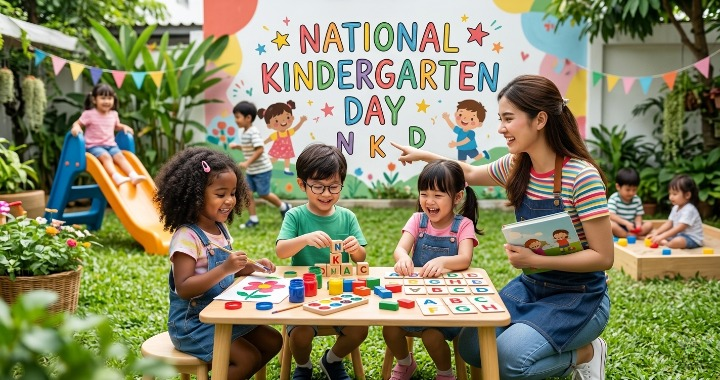
National Kindergarten Day is a #heart-warming celebration dedicated to the #foundation of early childhood #education and the #joyful journey of #learning. Observed annually on April 21, this special day recognizes the importance of #nurturing young minds through #creativity, #play, and #structurededucation. The first mention of #NationalKindergartenDay brings attention to how early education shapes a child’s future #personality, #skills, and #confidence. #Kindergarten is not just a #classroom — it is a place where curiosity #blossoms, #friendships begin, and the #seeds of knowledge are #planted. This day reminds us to value #teachers, #parents, and #institutions that contribute to a child’s #formative #years.
History of National Kindergarten Day
National Kindergarten Day is celebrated in honour of the birth anniversary of Friedrich Froebel, the German educator who founded the concept of kindergarten in 1837. Froebel introduced a revolutionary idea—that children learn best through play, creativity, and hands-on experiences rather than strict academic instruction.
The term “Kindergarten” itself means “children’s garden” in German, symbolizing a nurturing environment where young minds can grow naturally. Froebel’s teaching methods included songs, games, storytelling, and activities that encouraged exploration and imagination.
Although kindergarten education spread across Europe and later to countries like the United States and India in the late 19th and early 20th centuries, the formal recognition of National Kindergarten Day came much later. Educational institutions and organizations began celebrating April 21 to honour Froebel’s contributions and emphasize the importance of early education.
Over time, this day gained popularity globally as awareness increased about early childhood development and the need for structured foundational education.
Importance of National Kindergarten Day
National Kindergarten Day holds immense importance because it highlights the critical role of early education in shaping a child’s future. The kindergarten stage is where children develop essential cognitive, emotional, and social skills.
At this stage, children learn basic communication, problem-solving, and cooperation skills. These abilities become the building blocks for future academic success and personal growth. The day reminds parents and educators that education is not just about textbooks—it is about fostering curiosity, creativity, and confidence.
Another key reason for its importance is the recognition of teachers. Kindergarten teachers play a vital role in guiding children with patience, care, and dedication. Their influence often leaves a lasting impact on a child’s life.
Additionally, National Kindergarten Day raises awareness about equal access to education. Not all children have the privilege of attending kindergarten, especially in developing regions. National Kindergarten Day encourages society to work toward inclusive education for every child.
Why the Date is Chosen for National Kindergarten Day
April 21 is chosen as National Kindergarten Day because it marks the birth anniversary of Friedrich Froebel. This date serves as a tribute to his pioneering efforts in revolutionizing early childhood education.
Celebrating the day on his birthday adds historical significance and reminds people of his philosophy that children learn best in an environment filled with love, play, and creativity. It is not just a coincidence but a meaningful decision to honour the person who introduced the world to the concept of kindergarten.
The date also falls in a period when many schools are active, making it easier for educational institutions to organize events, activities, and celebrations involving children.
Significance of National Kindergarten Day
The significance of National Kindergarten Day lies in its focus on the holistic development of children. It emphasizes that education is not limited to academic achievements but also includes emotional intelligence, creativity, and social skills.
Kindergarten acts as a bridge between home and formal schooling. It prepares children for structured learning while maintaining a playful environment. This balance is crucial for reducing stress and making learning enjoyable.
National Kindergarten Day also promotes innovative teaching methods. Educators are encouraged to adopt creative approaches such as storytelling, art, music, and interactive games to make learning more engaging.
Furthermore, National Kindergarten Day highlights the importance of parental involvement. Parents are reminded to actively participate in their child’s early education, as their support plays a crucial role in shaping a child’s confidence and learning habits.
How Citizens are Affected
National Kindergarten Day impacts citizens in various ways, both directly and indirectly.
For parents, it serves as a reminder to prioritize early education and choose the right environment for their children. It encourages them to spend quality time with their kids and support their learning journey.
Teachers benefit from recognition and appreciation for their hard work. This boosts morale and motivates them to continue nurturing young minds with dedication.
For society as a whole, the day emphasizes the importance of investing in education. A strong educational foundation leads to a more informed, skilled, and responsible population.
Even policymakers are influenced, as the day draws attention to the need for better educational infrastructure, training programs for teachers, and accessible schooling for all children.
In essence, National Kindergarten Day contributes to building a stronger and more educated society.
10 Famous Quotes for National Kindergarten Day
-
“Play is the highest form of research.” – Albert Einstein
-
“Children learn as they play. Most importantly, in play, children learn how to learn.” – O. Fred Donaldson
-
“The greatest gifts you can give your children are the roots of responsibility and the wings of independence.” – Denis Waitley
-
“Education is not the filling of a pail, but the lighting of a fire.” – William Butler Yeats
-
“Children are not things to be molded, but are people to be unfolded.” – Jess Lair
-
“Free the child’s potential, and you will transform him into the world.” – Maria Montessori
-
“Every child is an artist.” – Pablo Picasso
-
“The future of the world is in my classroom today.” – Ivan Welton Fitzwater
-
“Children must be taught how to think, not what to think.” – Margaret Mead
-
“Tell me and I forget. Teach me and I remember. Involve me and I learn.” – Benjamin Franklin
FAQs on National Kindergarten Day
1. What is National Kindergarten Day?
It is a day dedicated to celebrating early childhood education and kindergarten learning.
2. When is National Kindergarten Day celebrated?
It is celebrated on April 21 every year.
3. Why is National Kindergarten Day important?
It highlights the importance of early education in a child’s development.
4. Who founded kindergarten?
Friedrich Froebel founded kindergarten.
5. What does “kindergarten” mean?
It means “children’s garden” in German.
6. Why is April 21 chosen?
It marks the birth anniversary of Friedrich Froebel.
7. When was kindergarten first introduced?
It was introduced in 1837.
8. What is the purpose of kindergarten education?
To develop basic skills through play and structured learning.
9. How is National Kindergarten Day celebrated?
Through activities, games, storytelling, and educational events.
10. What role do teachers play?
They guide and nurture children’s learning and development.
11. Is kindergarten mandatory?
It depends on the country and education system.
12. What skills do children learn in kindergarten?
Communication, social interaction, and basic academics.
13. How can parents participate?
By engaging in activities and supporting their child’s learning.
14. What is play-based learning?
Learning through games and creative activities.
15. Why is early education important?
It builds a strong foundation for future learning.
16. How does kindergarten help social skills?
Children learn to share, cooperate, and interact.
17. Are there different types of kindergarten?
Yes, including public, private, and Montessori systems.
18. What is the ideal age for kindergarten?
Usually between 3 to 6 years.
19. How has kindergarten evolved?
It has incorporated modern teaching methods and technology.
20. What message does National Kindergarten Day convey?
That every child deserves quality early education.
Conclusion
National Kindergarten Day is more than just a celebration—it is a reminder of the profound impact early education has on shaping the future. By honoring the legacy of Friedrich Froebel, the day emphasizes the importance of nurturing young minds with care, creativity, and compassion.
In today’s fast-paced world, the value of foundational learning often gets overlooked. However, kindergarten remains the cornerstone of a child’s educational journey. It is where imagination meets knowledge, and curiosity turns into discovery.
As we celebrate this day, it is essential to recognize the role of teachers, parents, and institutions in creating a supportive learning environment. Investing in early education is not just beneficial for individuals but for society as a whole.
Ultimately, National Kindergarten Day inspires us to ensure that every child receives the opportunity to learn, grow, and thrive in a joyful and nurturing environment.
|
!!! Stay Updated !!! 👉 Follow and Join us on 👈 📰 Trending News | 📢 Important Alerts | 💼 Latest Jobs LinkedIn | Threads | Facebook |Instagram | Tumblr 📱 Follow us daily & never miss an update 📱
|


My name is Subhajit Bhattacharya , I am a Instrumentatin Engineer and working as a content writer for this site, All the information of this site is only for educational purpose.
Discover more from Today's Significance
Subscribe to get the latest posts sent to your email.