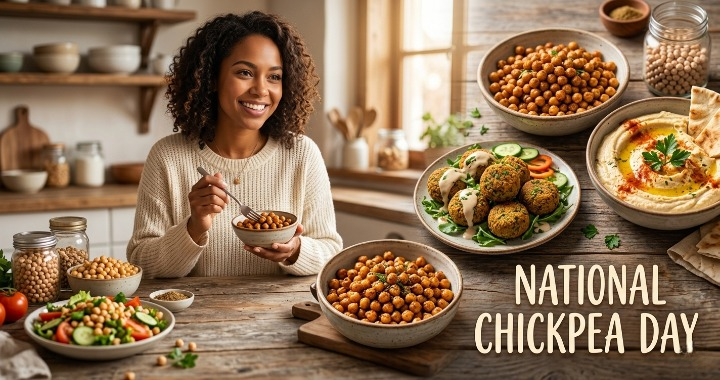
Every year on 21st April, #foodlovers, #nutritionists, and #agriculturalcommunities come together to celebrate National Chickpea Day, a day dedicated to one of the most #versatile and #nutritious #legumes known to #humankind — the #chickpea. Popularly known as Chickpea, this humble ingredient plays a crucial role in global #diets and #sustainableagriculture. #NationalChickpeaDay is not just about #food; it highlights #health, #sustainability, and #economic value. From #Indiankitchens to #Mediterraneanplates, chickpeas are a #staple. This day encourages awareness about their #benefits and #promotes their inclusion in daily diets for a #healthierlifestyle.
History of National Chickpea Day
National Chickpea Day is a relatively modern observance, gaining popularity in the early 21st century as part of a broader movement to recognize the importance of pulses in global nutrition. While there is no single universally documented founder, the celebration is strongly associated with initiatives by agricultural organizations, nutrition advocacy groups, and food sustainability campaigns.
A significant boost to the recognition of chickpeas came after the declaration of 2016 as the International Year of Pulses by the United Nations. This global initiative aimed to increase awareness about pulses, including chickpeas, for their nutritional benefits and role in sustainable food systems. Following this, several countries, especially India — one of the largest producers and consumers of chickpeas — began promoting awareness days dedicated to specific pulses.
National Chickpea Day on 21st April emerged as part of these awareness campaigns, driven by agricultural boards, farmers’ cooperatives, and health organizations. These groups aimed to highlight chickpeas as a superfood that can combat malnutrition, support farmers, and contribute to environmental sustainability.
Though not tied to a single individual, the day represents a collective effort by global and local communities to recognize the immense value of chickpeas in modern diets and agriculture.
Importance of National Chickpea Day
The importance of National Chickpea Day lies in its ability to bring attention to a food that is both simple and powerful. Chickpeas are packed with essential nutrients such as protein, fibre, vitamins, and minerals, making them an excellent dietary choice for people of all ages.
In a world where lifestyle diseases such as diabetes, obesity, and heart conditions are on the rise, chickpeas offer a natural solution. Their low glycaemic index helps regulate blood sugar levels, while their high fibre content aids digestion and promotes gut health.
Additionally, chickpeas are crucial for food security. They are affordable, easy to grow, and can thrive in semi-arid climates, making them accessible to populations in developing countries. For farmers, chickpeas are a valuable crop that improves soil fertility through nitrogen fixation.
The day also promotes plant-based diets, which are increasingly being recognized for their health and environmental benefits. By celebrating chickpeas, National Chickpea Day encourages people to make conscious food choices that benefit both their health and the planet.
Why the Date is Chosen for National Chickpea Day
The choice of 21st April for National Chickpea Day is believed to be linked to agricultural cycles and seasonal relevance. In many parts of the world, particularly in India, chickpea harvesting season concludes around March and April. By late April, the crop is widely available in markets, making it an ideal time to celebrate and promote its consumption.
This timing allows farmers, traders, and consumers to participate actively in the celebration. It also serves as a post-harvest recognition of the hard work of farmers and the importance of chickpeas in the agricultural economy.
Moreover, April is a month associated with health awareness and nutrition campaigns globally. Placing National Chickpea Day within this period helps align it with broader initiatives promoting healthy eating and sustainable food systems.
Significance of National Chickpea Day
The significance of National Chickpea Day extends beyond just celebrating a food item. It represents a larger movement toward sustainable living, nutritional awareness, and agricultural empowerment.
Firstly, chickpeas are a symbol of nutritional balance. They are a rich source of plant-based protein, making them essential for vegetarians and vegans. Their inclusion in diets helps address protein deficiencies, especially in developing countries.
Secondly, chickpeas contribute to environmental sustainability. As a legume, they improve soil health by fixing nitrogen, reducing the need for chemical fertilizers. This makes them an eco-friendly crop that supports sustainable farming practices.
Thirdly, the day highlights cultural diversity. Chickpeas are used in a wide range of cuisines — from Indian chole and hummus in the Middle East to salads and snacks in Western countries. This versatility makes them a global culinary staple.
Finally, National Chickpea Day promotes economic growth. The cultivation and trade of chickpeas provide livelihoods to millions of farmers and workers worldwide. By increasing awareness and demand, National Chickpea Day supports rural economies and agricultural development.
How Citizens are Affected
National Chickpea Day impacts citizens in multiple ways, both directly and indirectly.
From a health perspective, the day encourages individuals to incorporate chickpeas into their diets. This can lead to improved nutrition, better digestion, and reduced risk of chronic diseases. Awareness campaigns often provide recipes and cooking ideas, making it easier for people to adopt healthier eating habits.
Economically, consumers benefit from the affordability of chickpeas. As a cost-effective source of protein, they help families maintain a balanced diet without excessive spending.
For farmers and agricultural workers, the day brings recognition and support. Increased demand for chickpeas can lead to better prices and improved livelihoods. It also encourages the adoption of sustainable farming practices.
Socially, National Chickpea Day fosters community engagement. Cooking events, food festivals, and awareness programs bring people together, promoting a sense of unity and shared purpose.
Environmentally, citizens benefit from the promotion of sustainable crops like chickpeas, which contribute to soil health and reduce the environmental impact of agriculture.
10 Famous Quotes for National Chickpea Day
-
“Good food is the foundation of genuine happiness.”
-
“Let food be thy medicine and medicine be thy food.”
-
“Small seeds can create big changes.”
-
“Healthy eating is a way of life, not a diet.”
-
“Simplicity in food brings richness in life.”
-
“The power of plants is the future of nutrition.”
-
“Nature provides everything we need — we just need to choose wisely.”
-
“A humble bean can feed the world.”
-
“Sustainability begins with what we eat.”
-
“Chickpeas today, healthier tomorrow.”
FAQs on National Chickpea Day
1. What is National Chickpea Day?
It is a day dedicated to promoting the nutritional and agricultural importance of chickpeas.
2. When is National Chickpea Day celebrated?
It is celebrated on 21st April every year.
3. Why are chickpeas important?
They are rich in protein, fibre, and essential nutrients.
4. What are chickpeas also known as?
They are also called garbanzo beans.
5. Are chickpeas good for health?
Yes, they support heart health, digestion, and weight management.
6. Can chickpeas help in weight loss?
Yes, due to their high fibre and protein content.
7. Are chickpeas suitable for diabetics?
Yes, they have a low glycaemic index.
8. What dishes can be made from chickpeas?
Chole, hummus, salads, snacks, and curries.
9. Are chickpeas vegan-friendly?
Yes, they are a plant-based protein source.
10. Which country produces the most chickpeas?
India is the largest producer.
11. Are chickpeas environmentally friendly?
Yes, they improve soil fertility.
12. Can chickpeas replace meat?
They can be a good alternative protein source.
13. Are chickpeas gluten-free?
Yes, they are naturally gluten-free.
14. How are chickpeas consumed?
Boiled, roasted, ground into flour, or cooked in dishes.
15. What nutrients do chickpeas contain?
Protein, fibre, iron, magnesium, and vitamins.
16. Are canned chickpeas healthy?
Yes, if rinsed properly to reduce sodium.
17. Can children eat chickpeas?
Yes, they are highly nutritious for all ages.
18. What is chickpea flour used for?
It is used in snacks, pancakes, and gluten-free recipes.
19. How do chickpeas help farmers?
They improve soil and provide economic benefits.
20. Why celebrate Chickpea Day?
To promote health, sustainability, and agriculture.
Conclusion
National Chickpea Day is more than just a celebration of a food item; it is a reminder of how simple, natural resources can have a profound impact on our lives. From improving health and supporting sustainable agriculture to boosting economies and promoting cultural diversity, chickpeas play a vital role in our daily existence.
As we observe this day on 21st April, it is an opportunity to reflect on our food choices and their impact on the world around us. By embracing chickpeas in our diets, we not only nourish our bodies but also contribute to a more sustainable and equitable future.
In a fast-paced world filled with processed foods and unhealthy habits, National Chickpea Day encourages us to return to the basics — wholesome, nutritious, and environmentally friendly food. And sometimes, that change begins with something as simple as a chickpea.
|
!!! Stay Updated !!! 👉 Follow and Join us on 👈 📰 Trending News | 📢 Important Alerts | 💼 Latest Jobs LinkedIn | Threads | Facebook |Instagram | Tumblr 📱 Follow us daily & never miss an update 📱
|


My name is Subhajit Bhattacharya , I am a Instrumentatin Engineer and working as a content writer for this site, All the information of this site is only for educational purpose.
Discover more from Today's Significance
Subscribe to get the latest posts sent to your email.