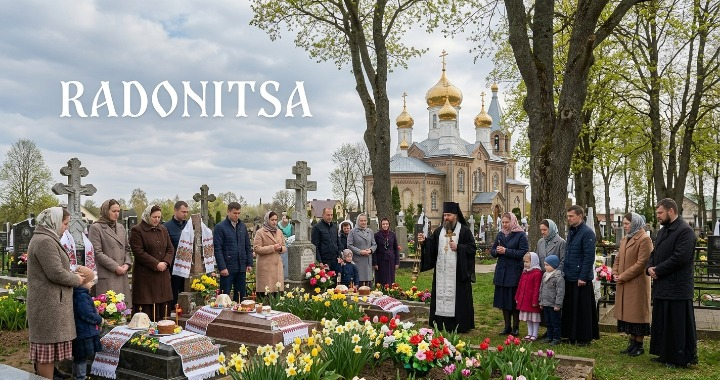
#Radonitsa is a deeply #spiritual and #emotionally profound observance in #EasternChristian traditions, dedicated to remembering #loved ones who have passed away. Celebrated shortly after #Easter, this day blends mourning with #hope, #sorrow with #resurrection #joy. Unlike somber memorial days, Radonitsa carries a unique tone — it is not just about grief, but about reconnecting with the departed through #faith, #prayer, and #remembrance. #Families gather, visit #cemeteries, and share #symbolic #meals, reflecting a belief that #death is not the end but a transition. In 2026, Radonitsa falls on 21st April, continuing a timeless tradition rooted in #faith and #love.
History of Radonitsa
The origins of Radonitsa date back to early Slavic and Eastern Orthodox Christian traditions. The name “Radonitsa” is derived from the Slavic word “radost”, meaning “joy,” which reflects the essence of the day—joyful remembrance.
The observance began taking shape around the early centuries of Christianity (around 3rd–5th century AD), particularly within the Eastern Orthodox Church. It was not initiated by a single individual but evolved collectively among early Christian communities in Eastern Europe, especially in regions like Russia, Belarus, and Ukraine.
Before Christianity spread, Slavic pagan tribes had traditions of honouring ancestors during springtime. When Christianity was introduced, the Church adapted these customs into a Christian framework. Thus, Radonitsa became a harmonious blend of pagan ancestral rituals and Christian beliefs about resurrection.
The Orthodox Church officially incorporated Radonitsa into its liturgical calendar as a day to commemorate the dead after Easter. Since Easter symbolizes Christ’s victory over death, Radonitsa extends that joy to departed souls, affirming the hope of eternal life.
Importance of Radonitsa
Radonitsa holds immense importance for believers as it serves as a bridge between the living and the departed. The day emphasizes:
-
Spiritual connection: It allows families to feel connected with their ancestors through prayer.
-
Faith in resurrection: It reinforces the belief that death is not final, but a passage to eternal life.
-
Emotional healing: Visiting graves and remembering loved ones provides comfort and closure.
-
Cultural continuity: Traditions passed through generations keep heritage alive.
Unlike other remembrance days that focus solely on mourning, Radonitsa encourages people to celebrate life and resurrection, making it spiritually uplifting.
Why the Date is Chosen for Radonitsa
Radonitsa is observed on the second Tuesday after Easter Sunday in the Eastern Orthodox calendar.
The reasoning behind this date is deeply symbolic:
-
The week immediately following Easter, known as Bright Week, is dedicated entirely to celebrating Christ’s resurrection, leaving no room for mourning.
-
The first opportunity to commemorate the dead comes after this joyous period, hence the second Tuesday.
-
Tuesday is chosen because Monday is often reserved for church services, making Tuesday practical for cemetery visits.
Thus, the date represents a balance between joy and remembrance, aligning with the Christian belief that resurrection brings hope even in death.
Significance of Radonitsa
Radonitsa is significant on multiple levels—religious, emotional, and cultural.
-
Religious Significance
It symbolizes the continuation of Easter joy, extending it to those who have passed away. Believers pray for the souls of the departed, asking for peace and salvation. -
Emotional Significance
It provides a structured way for individuals to process grief, transforming sadness into a sense of connection and peace. -
Cultural Significance
Traditions such as bringing food to graves, decorating tombstones, and family gatherings reflect deep-rooted cultural values. -
Philosophical Significance
The day highlights the transient nature of life and encourages people to live meaningfully.
How Citizens are Affected
Radonitsa influences individuals and communities in several ways:
-
Strengthens family bonds: Families gather to honour ancestors together.
-
Promotes reflection: People take time to think about life, death, and legacy.
-
Encourages gratitude: Remembering loved ones fosters appreciation for relationships.
-
Supports mental well-being: Rituals of remembrance help in coping with loss.
-
Boosts cultural identity: Communities feel a sense of belonging through shared traditions.
Even for those who are not deeply religious, Radonitsa serves as a reminder of the importance of honouring one’s roots and cherishing memories.
10 Famous Quotes for Radonitsa
-
“To live in hearts we leave behind is not to die.”
-
“Death ends a life, not a relationship.”
-
“What we once enjoyed we can never lose.”
-
“Grief is the price we pay for love.”
-
“Those we love never truly leave us.”
-
“Memory is the treasure house of the mind.”
-
“The song is ended, but the melody lingers on.”
-
“Love transcends even the boundaries of death.”
-
“In the garden of memory, in the palace of dreams, that is where you and I shall meet.”
-
“Gone yet not forgotten, although we are apart.”
FAQs on Radonitsa
1. What is Radonitsa?
Radonitsa is a Christian day of remembrance for the deceased, celebrated after Easter.
2. When is Radonitsa in 2026?
It is observed on 21st April 2026.
3. Which countries celebrate Radonitsa?
Primarily Russia, Belarus, Ukraine, and other Eastern European nations.
4. Is Radonitsa a public holiday?
In some regions, it is recognized as a public holiday.
5. What does the name Radonitsa mean?
It means “joyful day” or “day of rejoicing.”
6. Why is Radonitsa celebrated after Easter?
To connect the joy of resurrection with remembrance of the dead.
7. How do people celebrate Radonitsa?
By visiting graves, offering prayers, and sharing meals.
8. Is Radonitsa similar to All Souls’ Day?
Yes, but it has unique traditions and timing.
9. What food is offered on Radonitsa?
Traditional foods like eggs, bread, and sweets.
10. Why are eggs used in Radonitsa rituals?
Eggs symbolize resurrection and new life.
11. Can non-Christians observe Radonitsa?
Yes, anyone can participate in remembrance activities.
12. What prayers are said on Radonitsa?
Prayers for the peace and salvation of departed souls.
13. Is Radonitsa a sad or happy day?
It is both—solemn yet hopeful.
14. Do people clean graves on this day?
Yes, cleaning and decorating graves is common.
15. What is the main message of Radonitsa?
Hope in life after death.
16. Why is it called a joyful remembrance?
Because it celebrates eternal life, not just loss.
17. Is Radonitsa mentioned in the Bible?
Not directly; it developed through tradition.
18. What is the role of the church on this day?
Churches conduct memorial services.
19. How is Radonitsa different from funerals?
Funerals mourn death, while Radonitsa celebrates remembrance.
20. Can families gather at home instead of cemeteries?
Yes, remembrance can be done anywhere with sincerity.
Conclusion
Radonitsa is more than a ritual—it is a powerful reminder of the enduring bond between the living and the departed. By blending remembrance with the joy of resurrection, it transforms grief into hope and sorrow into peace. In a fast-paced world, such traditions encourage people to pause, reflect, and reconnect with their roots. Observing Radonitsa in 2026 on April 21 offers an opportunity to honour loved ones with dignity and faith. Ultimately, it teaches a timeless lesson: while life may end, love and memory continue forever, transcending the boundaries of time and existence.
|
!!! Stay Updated !!! 👉 Follow and Join us on 👈 📰 Trending News | 📢 Important Alerts | 💼 Latest Jobs LinkedIn | Threads | Facebook |Instagram | Tumblr 📱 Follow us daily & never miss an update 📱
|


Someshwar Chowdhury is a seasoned Chartered Mechanical Engineer, Educator, and Technology enthusiast with over a decade of experience in engineering education and consultancy. Someshwar is also an active blogger, trainer, and member of professional bodies like ISHRAE and GREEN ADD+. When not teaching or consulting, he enjoys blogging, music, and exploring green technologies.
Discover more from Today's Significance
Subscribe to get the latest posts sent to your email.