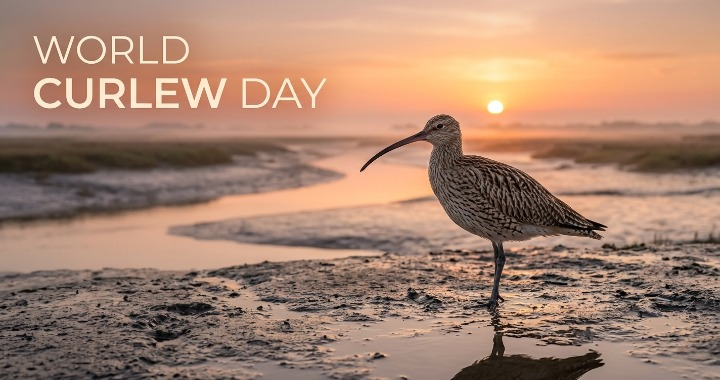
Every year on 21st April, #naturelovers, #conservationists, and #birdenthusiasts come together to observe #WorldCurlewDay, a #global #initiative dedicated to raising #awareness about one of the most distinctive yet threatened #bird species — the #curlew. Recognized for its long, curved bill and haunting calls across #wetlands and #grasslands, the curlew symbolizes the fragile #balance of #ecosystems. However, despite its #beauty and #ecological importance, this bird faces severe threats from #habitatloss and #environmentalchanges. World Curlew Day serves as a #crucial reminder of our #responsibility to protect #biodiversity and preserve the #natural #habitats that #sustain #life on #Earth.
History of World Curlew Day
World Curlew Day was first initiated in 2017 by Mary Colwell, a renowned British conservationist, environmental campaigner, and author. She launched this day as part of her broader mission to protect curlew populations, particularly in the United Kingdom, where their numbers had seen a dramatic decline.
Mary Colwell’s journey began with her deep concern for the Eurasian curlew, whose population had dropped significantly due to habitat destruction, agricultural changes, and increased predation. She undertook a powerful campaign, including a 500-mile walk across Ireland and the UK, to raise awareness about the plight of curlews.
The initiative quickly gained international recognition. Conservation groups, environmental organizations, birdwatching communities, and schools across the world started participating in events, campaigns, and educational programs on this day. Over time, World Curlew Day evolved into a global platform for highlighting conservation efforts and advocating sustainable environmental practices.
Importance of World Curlew Day
The importance of World Curlew Day lies in its role as a wake-up call for humanity. Curlews are considered an indicator species, meaning their presence or absence reflects the health of ecosystems such as wetlands, moorlands, and grasslands.
Several reasons highlight the importance of World Curlew Day:
-
Raising Awareness: Many people are unaware of the declining population of curlews. World Curlew Day spreads knowledge about their ecological role and conservation needs.
-
Promoting Conservation Efforts: Governments and NGOs use this platform to implement and promote habitat protection strategies.
-
Encouraging Community Participation: Individuals, schools, and local communities engage in activities like birdwatching, awareness campaigns, and environmental clean-ups.
-
Highlighting Biodiversity Loss: The decline of curlews reflects broader environmental issues such as climate change, urbanization, and unsustainable agriculture.
Without such dedicated awareness days, many species might quietly slip into extinction without public attention or action.
Why the Date is Chosen for World Curlew Day
The date 21st April is carefully selected as it coincides with the peak breeding season of curlews in many parts of the world, especially in Europe.
During this period:
-
Curlews are most active and visible.
-
Their unique calls can be heard across landscapes, making it easier to identify and observe them.
-
It is a crucial time for nesting and raising chicks, highlighting the importance of protecting their habitats.
Choosing this date helps maximize awareness and engagement, as people can witness first-hand the beauty and vulnerability of these birds in their natural environment.
Significance of World Curlew Day
World Curlew Day holds immense ecological, educational, and cultural significance.
Ecological Significance:
Curlews play a vital role in maintaining ecological balance. They help control insect populations and contribute to the health of wetlands by influencing soil and water conditions through their feeding behaviour.
Educational Significance:
World Curlew Day, encourages learning about biodiversity, conservation science, and environmental responsibility. Schools and educational institutions often organize workshops and awareness programs.
Cultural Significance:
In many regions, curlews are part of folklore and traditional landscapes. Their haunting calls are often associated with wilderness and natural beauty.
Global Significance:
It brings together people from different countries under a shared goal—protecting endangered species and preserving ecosystems.
How Citizens are Affected
The decline of curlews is not just an environmental issue—it directly impacts human life.
-
Loss of Biodiversity: A decline in species reduces ecosystem stability, affecting food chains and natural resources.
-
Environmental Imbalance: Healthy ecosystems regulate climate, water cycles, and soil fertility, all of which are essential for human survival.
-
Economic Impact: Wetlands and grasslands support agriculture, tourism, and fisheries. Their degradation can lead to economic losses.
-
Emotional and Cultural Loss: The disappearance of curlews means losing a part of natural heritage and cultural identity.
Citizens are both contributors to the problem and key players in the solution. Sustainable living, responsible consumption, and participation in conservation efforts can make a significant difference.
10 Famous Quotes for World Curlew Day
-
“The earth does not belong to us; we belong to the earth.”
-
“In every walk with nature, one receives far more than he seeks.”
-
“A bird does not sing because it has an answer; it sings because it has a song.”
-
“He who protects nature protects himself.”
-
“The fate of animals is of greater importance to me than the fear of appearing ridiculous.”
-
“Look deep into nature, and then you will understand everything better.”
-
“Extinction is forever—it is our responsibility to prevent it.”
-
“Nature always wears the colours of the spirit.”
-
“If we save our wild places, we will ultimately save ourselves.”
-
“Birds are indicators of the environment. If they are in trouble, we know we’ll soon be in trouble.”
Frequently Asked Questions (FAQs)
1. What is World Curlew Day?
World Curlew Day is an annual observance dedicated to raising awareness about curlew conservation.
2. When is World Curlew Day celebrated?
It is observed every year on 21st April.
3. Who started World Curlew Day?
It was initiated by Mary Colwell in 2017.
4. Why are curlews important?
They help maintain ecological balance and indicate environmental health.
5. What is a curlew?
A curlew is a large wading bird known for its long, curved bill.
6. Where are curlews found?
They are found in Europe, Asia, Africa, and parts of North America.
7. Why are curlews endangered?
Due to habitat loss, climate change, and predation.
8. What habitats do curlews prefer?
Wetlands, grasslands, and coastal areas.
9. What do curlews eat?
They feed on insects, worms, and small aquatic creatures.
10. How can we help curlews?
By protecting habitats and supporting conservation efforts.
11. What is the Eurasian curlew?
It is the most widespread species of curlew.
12. Are curlews migratory birds?
Yes, many species migrate seasonally.
13. What threats do curlews face?
Habitat destruction, farming practices, and predators.
14. Why is 21st April important for curlews?
It marks their breeding season.
15. What organizations support curlew conservation?
Various environmental NGOs and bird protection groups.
16. Can curlews be seen in India?
Yes, some species are found in parts of India.
17. What role do curlews play in ecosystems?
They help control insect populations and maintain soil health.
18. How long do curlews live?
They can live up to 20-30 years in the wild.
19. What is being done to save curlews?
Habitat restoration and awareness campaigns.
20. Why should we care about curlews?
Their survival reflects the health of our planet.
Conclusion
World Curlew Day is more than just a date on the calendar—it is a powerful reminder of the delicate balance of nature and the urgent need for conservation. The curlew, with its distinctive appearance and haunting call, represents the beauty and vulnerability of wildlife. Its decline signals deeper environmental challenges that demand immediate attention.
As individuals, we hold the power to influence change. Whether through spreading awareness, supporting conservation initiatives, or adopting sustainable practices, every action counts. Protecting curlews means protecting ecosystems, biodiversity, and ultimately, our own future.
Let World Curlew Day inspire us to act—not just for one species, but for the countless forms of life that share this planet with us.
|
!!! Stay Updated !!! 👉 Follow and Join us on 👈 📰 Trending News | 📢 Important Alerts | 💼 Latest Jobs LinkedIn | Threads | Facebook |Instagram | Tumblr 📱 Follow us daily & never miss an update 📱
|


Someshwar Chowdhury is a seasoned Chartered Mechanical Engineer, Educator, and Technology enthusiast with over a decade of experience in engineering education and consultancy. Someshwar is also an active blogger, trainer, and member of professional bodies like ISHRAE and GREEN ADD+. When not teaching or consulting, he enjoys blogging, music, and exploring green technologies.
Discover more from Today's Significance
Subscribe to get the latest posts sent to your email.