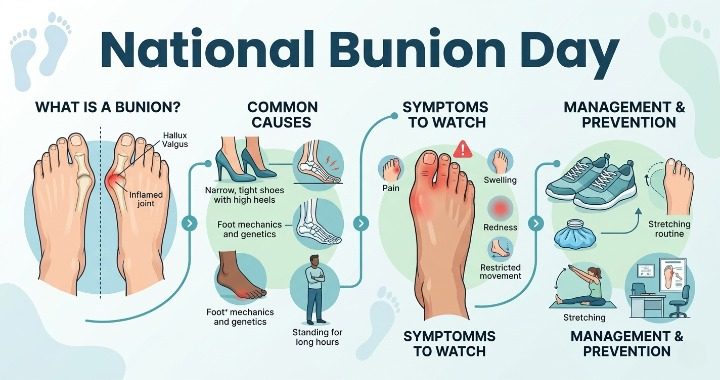
Every year on April 21, #awareness grows around a common yet often ignored #foot condition — #bunions. Marked by #discomfort, #swelling, and #misalignment of the #bigtoe, bunions affect millions across the #globe. National Bunion Day encourages #people to recognize early #symptoms, seek proper #care, and adopt healthier #footwear #habits. Despite being #widespread, many individuals neglect #treatment until #pain becomes #severe. Through #education and #awareness, this day aims to #reduce long-term #complications and improve #quality of #life. By observing #NationalBunionDay, individuals take a step toward #healthierfeet, better #mobility, and a more informed approach to #foothealth in daily life.
History of National Bunion Day
National Bunion Day was initiated in the early 2000s, around 2003, by a group of podiatrists and foot care specialists in the United States. One of the leading contributors to this awareness initiative was the American Podiatric Medical Association (APMA), an organization dedicated to advancing foot health and education.
The primary goal behind establishing National Bunion Day was to draw attention to a condition that affects a significant portion of the population, especially women, yet remains under-discussed. Bunions, medically referred to as “hallux valgus,” were often considered a cosmetic issue rather than a serious medical concern. This misconception led to delayed treatment and worsening conditions over time.
The founders recognized that modern lifestyle habits—such as wearing tight or high-heeled shoes—were increasing the prevalence of bunions. As a result, they chose to dedicate a day to promote awareness, prevention strategies, and early intervention.
Since its inception, National Bunion Day has grown steadily, gaining recognition through healthcare campaigns, social media awareness drives, and community outreach programs. Hospitals, clinics, and footwear brands often collaborate to spread information about proper foot care, making the day increasingly impactful each year.
Importance of National Bunion Day
The importance of National Bunion Day lies in its focus on prevention, awareness, and timely treatment of a condition that can significantly impact mobility and quality of life.
Bunions are not just minor foot deformities; they can lead to chronic pain, inflammation, difficulty walking, and even permanent joint damage if left untreated. Many individuals ignore the early signs—such as slight swelling or discomfort—until the condition becomes severe.
National Bunion Day plays a vital role in:
-
Educating people about the causes of bunions, including genetics, improper footwear, and foot structure abnormalities.
-
Encouraging early diagnosis, which can prevent the need for surgical intervention.
-
Promoting healthier lifestyle choices, particularly in terms of footwear.
-
Reducing stigma associated with foot deformities, making people more comfortable seeking medical advice.
In essence, National Bunion Day highlights that foot health is not a luxury but a necessity for overall well-being.
Why the Date is Chosen for National Bunion Day
April 21 was strategically chosen as National Bunion Day to align with the spring season in many parts of the world. During this time, people begin transitioning from closed footwear to sandals and open shoes, making foot conditions more visible and noticeable.
This seasonal shift serves as a practical reminder for individuals to pay attention to their feet. It is also a time when people are more likely to seek solutions for foot discomfort before the onset of summer activities such as traveling, walking, and outdoor sports.
Additionally, April is often associated with health awareness campaigns, making it an ideal month to promote foot health initiatives. The timing ensures maximum engagement and encourages people to take proactive steps toward addressing bunions.
Significance of National Bunion Day
The significance of National Bunion Day extends beyond just raising awareness—it emphasizes the importance of proactive healthcare and self-care.
Firstly, it highlights the connection between foot health and overall body posture. A bunion can alter the way a person walks, leading to issues in the knees, hips, and lower back. Thus, addressing bunions can prevent a chain reaction of musculoskeletal problems.
Secondly, the day promotes inclusivity in healthcare by addressing a condition that disproportionately affects women due to fashion choices like high heels. It brings attention to gender-specific health concerns that are often overlooked.
Thirdly, it encourages innovation in footwear design. Many brands now focus on creating stylish yet comfortable shoes that reduce pressure on the toes, thanks to growing awareness.
Finally, National Bunion Day fosters a culture of preventive healthcare, reminding individuals that small changes—like choosing the right shoes—can have a significant long-term impact.
How Citizens Are Affected
Bunions affect individuals across all age groups, though they are more common in adults and the elderly. The impact on citizens can be both physical and psychological.
Physically, bunions can cause persistent pain, swelling, redness, and difficulty in walking or standing for long periods. For individuals with active lifestyles or jobs that require prolonged standing, this can be particularly challenging.
Professionally, people may face reduced productivity due to discomfort or the need for frequent breaks. In severe cases, bunions can lead to absenteeism or limitations in job roles.
Psychologically, visible foot deformities can affect self-confidence. Many individuals feel embarrassed wearing open footwear, leading to social discomfort.
Financially, the cost of treatment—ranging from orthotic devices to surgery—can be significant, especially if the condition is not addressed early.
Thus, National Bunion Day serves as a reminder that a seemingly minor issue can have wide-ranging effects on daily life.
10 Famous Quotes for National Bunion Day
-
“Take care of your feet—they carry your dreams every day.”
-
“Healthy steps begin with healthy choices.”
-
“Ignoring small pains often leads to bigger problems.”
-
“Comfort is not a luxury; it is a necessity.”
-
“Your feet deserve as much care as your heart and mind.”
-
“Style should never come at the cost of health.”
-
“Listen to your body—it speaks through pain.”
-
“Prevention is always better than cure.”
-
“Walk wisely today for a pain-free tomorrow.”
-
“Every step you take reflects your care for yourself.”
FAQs on National Bunion Day
-
What is National Bunion Day?
National Bunion Day is observed on April 21 to raise awareness about bunions and foot health. -
What is a bunion?
A bunion is a bony bump that forms at the base of the big toe due to joint misalignment. -
What causes bunions?
Causes include genetics, tight footwear, high heels, and abnormal foot structure. -
Are bunions hereditary?
Yes, genetics can play a significant role in developing bunions. -
Can bunions be prevented?
Yes, wearing comfortable shoes and maintaining proper foot care can help prevent them. -
Do bunions require surgery?
Not always. Mild cases can be managed with non-surgical treatments. -
What are the early signs of a bunion?
Swelling, redness, and pain near the big toe joint. -
Are bunions more common in women?
Yes, due to footwear choices like high heels. -
Can children develop bunions?
Yes, though it is less common. -
What type of shoes should be avoided?
Tight, narrow, and high-heeled shoes should be avoided. -
How are bunions diagnosed?
Through physical examination and sometimes X-rays. -
Can exercise help bunions?
Yes, certain foot exercises can improve flexibility and reduce discomfort. -
Are bunions permanent?
They can worsen over time if not treated but can be managed effectively. -
What is the best treatment for bunions?
Treatment varies from orthotics to surgery depending on severity. -
Can bunions affect other parts of the body?
Yes, they can impact posture and cause joint pain elsewhere. -
Is walking with bunions painful?
Yes, especially in advanced stages. -
Are there home remedies for bunions?
Ice packs, proper footwear, and padding can provide relief. -
Can bunions come back after surgery?
Yes, in some cases they may recur. -
How common are bunions?
They affect millions worldwide, especially older adults. -
Why is awareness important?
Early awareness helps prevent complications and promotes better treatment outcomes.
Conclusion
National Bunion Day serves as an essential reminder that even small aspects of health, like foot care, deserve attention. Bunions may begin as a minor inconvenience but can evolve into a serious condition affecting mobility, confidence, and overall well-being. By dedicating a day to awareness, society encourages individuals to prioritize preventive care and seek timely medical advice.
The observance also highlights the importance of making informed lifestyle choices, particularly regarding footwear. As awareness continues to grow, more people are likely to adopt healthier habits, reducing the prevalence and severity of bunions.
Ultimately, National Bunion Day is not just about addressing a foot condition—it is about promoting a culture of self-care, awareness, and proactive health management.
|
!!! Stay Updated !!! 👉 Follow and Join us on 👈 📰 Trending News | 📢 Important Alerts | 💼 Latest Jobs LinkedIn | Threads | Facebook |Instagram | Tumblr 📱 Follow us daily & never miss an update 📱
|


My name is Subhajit Bhattacharya , I am a Instrumentatin Engineer and working as a content writer for this site, All the information of this site is only for educational purpose.
Discover more from Today's Significance
Subscribe to get the latest posts sent to your email.